Can Dogs Get Overstimulated?
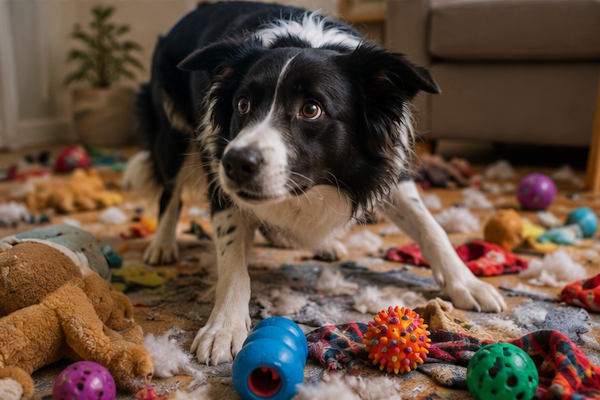
Like an over-excited child, an overstimulated dog needs calm and rest, not more activity.
Yes, dogs can get overstimulated, when too much noise, activity or excitement overwhelms them. Like an overtired toddler, an overstimulated dog can become hyper, mouthy, unable to settle and slow to respond to cues. It is especially common in puppies and high-energy dogs, and calm routines help enormously. An overstimulated dog is very often also overtired, since missed rest lowers its tolerance for excitement.
Signs of Overstimulation
| Sign | What you might notice |
|---|---|
| Zoomies | Sudden bursts of frantic running |
| Mouthing and nipping | Grabbing at hands, clothes or the leash |
| Not listening | Ignoring cues it usually knows well |
| Panting and pacing | Restless, unable to settle down |
| Barking | Excited, hard-to-stop vocalizing |
How to Help
- Lower the input. Move to a quiet, calm space away from the excitement, and on a hot day somewhere cool so a wound-up dog does not also get overheated.
- Offer rest. Give your dog the chance to nap or settle, even if it resists.
- Skip more training. Do not try to teach or play when your dog is over threshold.
- Use a calm activity. A chew or a lick mat helps lower arousal.
- Keep a routine. Regular downtime prevents your dog boiling over.
Frequently Asked Questions
What does an overstimulated dog look like?
An overstimulated dog is wired rather than relaxed: zooming around, jumping, mouthing or nipping, barking, panting, pacing, and struggling to respond to familiar cues. It can look like disobedience, but the dog is actually overwhelmed and cannot think clearly, much like an over-excited child.
What causes overstimulation in dogs?
Too much input at once: busy environments, loud noise, crowds, long or intense play sessions, lots of new people or dogs, or simply a day with no downtime. Puppies and high-energy breeds reach their limit faster, and missing regular rest makes it much more likely.
How do I calm an overstimulated dog?
Lower the input: move to a quiet space, dim the lights and reduce noise, and give your dog a chance to rest. Avoid trying to train or add more excitement in the moment. A settle routine, a calm chew, or crate time can help your dog wind down and reset.
How can I prevent overstimulation?
Build regular rest and quiet time into every day, keep play sessions to sensible lengths, and end them before your dog tips over the edge. A predictable routine, enough sleep, and calm handling all help your dog stay balanced rather than constantly revved up.
⚠️ Emergency? If your dog may have swallowed something toxic or is seriously unwell, contact your vet or a pet poison helpline immediately (in the US, the Pet Poison Helpline is 855-764-7661).
Sources: American Kennel Club (akc.org), VCA Animal Hospitals (vcahospitals.com) and the American Veterinary Medical Association (avma.org). This guide is for general information and is not a substitute for advice from your own veterinarian. See our editorial & review policy.


