Can Dogs Eat Bones?

Cooked bones splinter and can be deadly. Raw, meaty bones bigger than your dog's muzzle, given under supervision, are the safer choice.
Yes, dogs can eat some bones, but the type is everything. Raw, meaty bones that are bigger than your dog's muzzle can be a safe, enriching chew when you supervise. Cooked bones are never safe: they dry out and splinter into sharp shards that can choke your dog or tear the digestive tract. If you would rather skip the risk entirely, a gentler treat like a slice of apple carries none of the splinter danger.
Safe vs Dangerous Bones
Not all bones are equal. The safest options are raw and too big to swallow. The most dangerous are cooked, small, or cut into pieces. Here is the quick split.
Safer to chew
- Raw meaty bones like chicken or turkey necks, for suitably sized dogs
- Large raw beef marrow or knuckle bones
- Bones clearly bigger than your dog's mouth
- Fresh bones given under close supervision
- Short chewing sessions of 10 to 15 minutes
Never give
- Any cooked bone, because it splinters
- Small bones a dog can swallow whole
- Cut or sawn weight-bearing bones that crack teeth
- Pork bones and rib bones
- Old, dried-out or leftover bones from the table
Bone Safety at a Glance
| Bone or chew | Raw | Cooked |
|---|---|---|
| Chicken & turkey necks or wings | ⚠️ OK for many dogs, supervise | ❌ Never |
| Beef marrow & knuckle bones (large) | ✅ Good for big dogs | ❌ Never |
| Lamb bones | ⚠️ Larger cuts only | ❌ Never |
| Pork bones & rib bones | ❌ Avoid | ❌ Never |
| Small bones that fit in the mouth | ❌ Choking risk | ❌ Never |
| Fish bones | ❌ Avoid | ❌ Never |
The Real Risks
- Choking on a piece that breaks off
- Sharp splinters piercing the mouth, throat, stomach or intestines
- Cracked or broken teeth, especially on hard weight-bearing bones
- Blockages and painful constipation from swallowed fragments
- Cuts to the tongue, gums and lips
- An upset stomach, diarrhea or pancreatitis from rich, fatty marrow
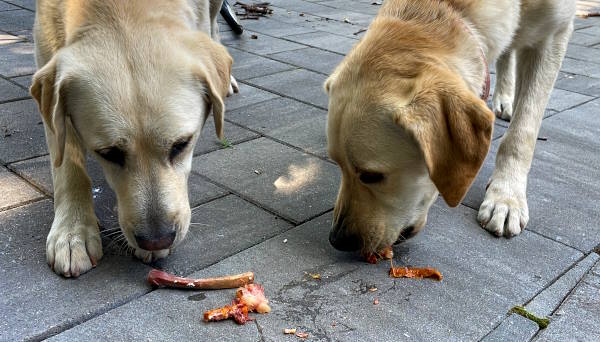
Raw, meaty bones sized to the dog, chewed under supervision
How to Serve a Bone Safely
- Choose raw, never cooked. Cooking makes bone brittle so it splinters. Raw bone is softer and more flexible.
- Go bigger than the muzzle. Pick a bone your dog cannot fit fully in its mouth, so it cannot be swallowed whole.
- Match the bone to your dog. Softer raw meaty bones suit gentle chewers, while large knuckle bones suit power chewers. Watch the teeth either way.
- Always supervise. Stay in the room and never leave your dog alone with a bone.
- Limit the session. Take the bone away after 10 to 15 minutes to reduce wear on teeth and gut.
- Refrigerate and discard. Store the bone in the fridge between chews and throw it out after three or four days to avoid bacteria.
The Benefits of the Right Bone
Cleaner teeth
Chewing helps scrape away soft plaque and tartar.
Mental enrichment
Satisfies the natural urge to chew and eases boredom.
Nutrients
Raw bone offers calcium, phosphorus and marrow fats.
Natural instinct
Mimics a species-appropriate, ancestral activity.
Did Your Dog Eat a Cooked Bone?
- Gagging, drooling or pawing at the mouth
- Repeated vomiting or refusing food
- A hard, bloated or painful belly
- Straining to poop, or black or bloody stool
Frequently Asked Questions
Can dogs eat cooked bones?
No. Cooking dries bone out and makes it brittle, so it splinters into sharp pieces that can crack teeth, cause choking, or puncture the throat, stomach or intestines. This is true of every cooked bone, including chicken, beef, pork and rib bones. Keep cooked bones, and the trash that holds them, well out of reach.
Can dogs eat raw chicken bones?
Many dogs can, with care. Raw chicken necks and wings are soft and flexible rather than brittle, so they are far less likely to splinter than cooked ones. Match the size to your dog, always supervise, and skip raw bones if your dog gulps food or has a sensitive stomach or a weakened immune system.
What bones are safest for aggressive chewers?
Powerful chewers do best with large raw knuckle or marrow bones that cannot be swallowed, but even these can chip teeth, so watch closely. Many vets suggest sturdy rubber chew toys or vet-approved dental chews instead, which satisfy the urge to gnaw with far less risk to teeth.
How often can a dog have a bone?
A raw bone once or twice a week is plenty for most dogs. Keep each session to about 10 to 15 minutes, refrigerate the bone between chews, and throw it away after three or four days to avoid bacteria. Too much rich marrow can also upset the stomach.
My dog swallowed a bone. What should I do?
Stay calm and call your vet or an emergency clinic for advice before doing anything. Watch for choking, gagging, drooling, vomiting, a hard or painful belly, straining to poop, or black or bloody stool. If any of these appear, treat it as an emergency and go in right away.
Are bones good for a dog's teeth?
Chewing can help scrape away soft plaque and gives the gums a workout, which is a real benefit. But hard bones are also a leading cause of broken teeth in dogs. For daily dental care, brushing and vet-approved dental chews are safer and more reliable than bones.
Sources: American Kennel Club (akc.org), VCA Animal Hospitals (vcahospitals.com) and the American Veterinary Medical Association (avma.org). This guide is for general information and is not a substitute for advice from your own veterinarian.