Can Dogs Get Glasses?
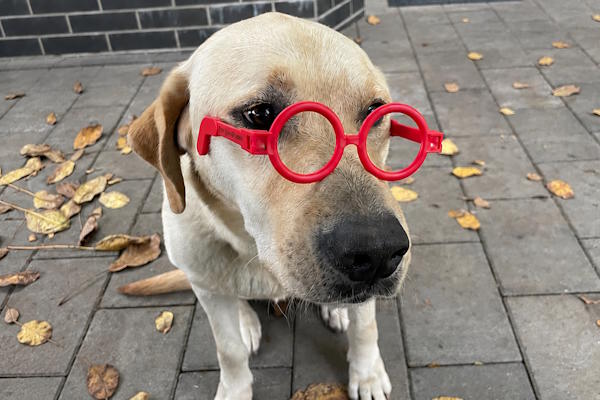
Dogs rarely need vision-correcting glasses. The eyewear they do wear protects the eyes from sun, wind, water and injury.
Yes, dogs can get glasses, but not the kind you might picture. Dogs do not sit down to read, and they rely on smell, hearing and movement far more than on sharp detail, so corrective spectacles are almost never needed. What dogs really wear is protective eyewear, often called dog goggles or by the popular brand name Doggles, to shield their eyes from sun, wind, water and flying debris, or to protect a healing eye after surgery. They do not fix an eye infection or other medical eye problem, which needs a vet.
Do Dogs Actually Need Glasses?
For everyday life, no. Dogs see the world differently from us: their close-up detail is fuzzier, but they excel at spotting movement and seeing in low light, and their nose does much of the work our eyes do. Because of this, a mild focus problem simply does not slow a dog down, and vets do not prescribe corrective lenses the way an optometrist would for a person.
When Dogs Really Do Wear Eyewear
Good reasons for dog goggles
- Sun and UV protection, from the same rays that cause sunburn, especially for dogs with the eye condition pannus
- Wind and flying debris for dogs riding in cars, on motorbikes or in open boats
- Water and glare while swimming, or bright snow on winter walks
- Working, police and military dogs exposed to dust, sand or downdraft
- Protecting a healing eye after surgery so the dog cannot rub or scratch it
Getting Your Dog Used to Goggles
- Pick the right fit. Choose goggles sized for your dog's face with an adjustable, snug but comfortable strap.
- Introduce them slowly. Let your dog sniff and inspect the goggles before they go anywhere near the eyes.
- Reward every step. Use treats and praise as you touch the goggles to the face, then briefly put them on.
- Start with short sessions. A few seconds at first, building up as your dog stays relaxed.
- Check the eyes. Make sure the goggles do not press or rub, and remove them if your dog seems distressed.
Frequently Asked Questions
Do dogs need glasses to see better?
Almost never for everyday life. Dogs are naturally a little nearsighted, but they rely far more on smell, hearing and their sharp sense of motion than on fine detail. Corrective 'reading' glasses are not practical or necessary for a normal pet dog. The eyewear dogs do wear is almost always protective goggles, not vision correction.
What are Doggles and dog goggles for?
Doggles is a well known brand of protective goggles made to fit a dog's face. Along with similar products, they shield the eyes from sun and UV, wind, dust and debris, water while swimming, and snow glare. They are popular with working dogs, motorcycle and car riders, and dogs with light-sensitive eye conditions.
Can dogs wear glasses after eye surgery?
Sometimes. After procedures such as cataract surgery, a vet may recommend protective eyewear to stop the dog rubbing or scratching the healing eye, often alongside or instead of a cone. In rare cases dogs are even fitted with special contact lenses. Always follow your veterinary ophthalmologist's advice.
Can dogs be nearsighted or farsighted?
Yes, to a degree. Studies show many dogs are mildly nearsighted, and some breeds more than others, while working dogs often have sharper distance vision. It rarely affects their daily life, so vets almost never prescribe corrective lenses the way an optometrist would for a person.
⚠️ Emergency? If your dog may have swallowed something toxic or is seriously unwell, contact your vet or a pet poison helpline immediately (in the US, the Pet Poison Helpline is 855-764-7661).
Sources: American Kennel Club (akc.org), VCA Animal Hospitals (vcahospitals.com) and the American Veterinary Medical Association (avma.org). This guide is for general information and is not a substitute for advice from your own veterinarian. See our editorial & review policy.


