Can Dogs Get Lyme Disease?

Tick control and prompt tick removal are your best defense against Lyme disease.
Yes, dogs can get Lyme disease, a bacterial infection spread by the bite of an infected tick, usually the deer tick. Many infected dogs show no signs, but some develop fever, lameness and swollen joints, and in rare cases serious kidney problems. Good tick prevention and prompt tick removal are the best ways to keep your dog safe.
Symptoms to Watch For
| Sign | What you might notice |
|---|---|
| Lameness | Limping that can shift from leg to leg |
| Swollen joints | Warm, painful, puffy joints |
| Fever | A raised temperature and feeling off |
| Low energy and appetite | Tiredness and eating less |
| Swollen lymph nodes | Enlarged glands, often near the bite |
How to Prevent It
- Use tick prevention. Keep your dog on a vet-recommended product year-round.
- Check after walks. Run your hands through the coat, especially ears, armpits and toes.
- Remove ticks promptly. Take off any tick right away with a proper tick tool.
- Keep grass short. Tidy the yard to reduce tick habitat.
- Ask about the vaccine. In high-risk areas your vet may recommend one.
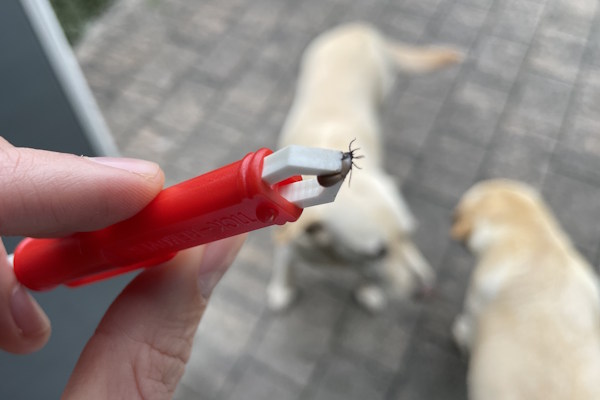 Every case of Lyme starts with a single tick bite. See our full guide to ticks on dogs for how to spot them, remove them safely and stop them coming back. Dogs are bitten by other parasites too, from fleas to mosquitoes.
Frequently Asked Questions
How do dogs catch Lyme disease?
Lyme disease is spread by the bite of an infected tick, usually the deer tick, which passes on a bacterium called Borrelia. The tick generally needs to stay attached for a day or two to transmit it, which is why fast tick removal after walks in grassy or wooded areas is so protective.
What are the symptoms of Lyme disease in dogs?
Many infected dogs show no signs at all. When symptoms do appear they include fever, tiredness, loss of appetite, swollen lymph nodes, and lameness that can shift from leg to leg with swollen, painful joints. Rarely, Lyme disease affects the kidneys, which is serious.
Is Lyme disease in dogs treatable?
Yes. It is usually treated with a course of antibiotics, and most dogs improve within a few days of starting treatment. Some dogs need longer courses or follow-up, and any kidney involvement requires more intensive care, so early diagnosis matters.
How can I protect my dog from Lyme disease?
Keep your dog on a year-round tick preventive, check the coat and skin after every walk in grass or woods, and remove any tick promptly and correctly. Keeping grass short helps, and in high-risk areas your vet may recommend a Lyme vaccine.
⚠️ Emergency? If your dog may have swallowed something toxic or is seriously unwell, contact your vet or a pet poison helpline immediately (in the US, the Pet Poison Helpline is 855-764-7661).
Sources: American Kennel Club (akc.org), VCA Animal Hospitals (vcahospitals.com) and the American Veterinary Medical Association (avma.org). This guide is for general information and is not a substitute for advice from your own veterinarian. See our editorial & review policy.